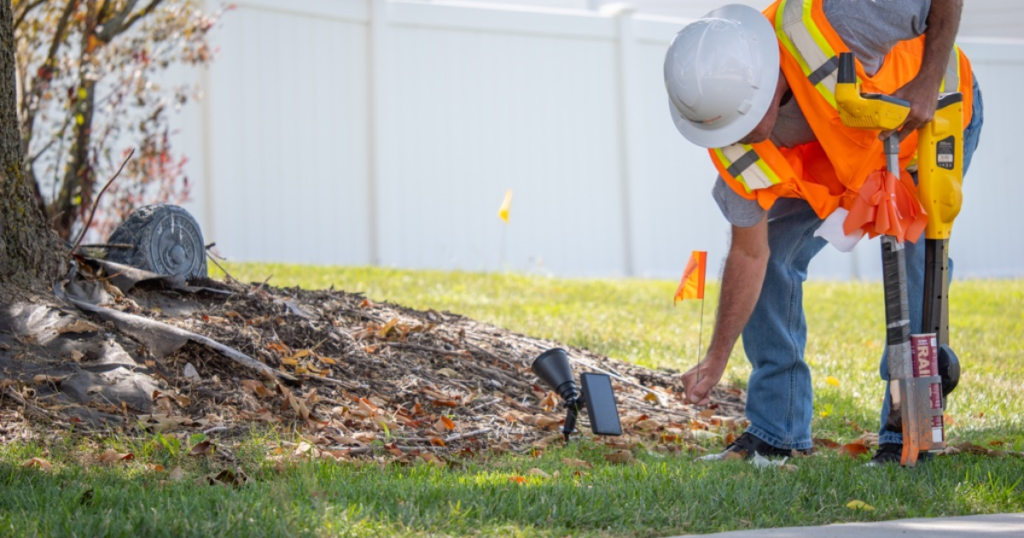
A shovel hits something. There is a hiss, a pop, or suddenly the power is out. The question that follows is almost always the same: who is responsible for damaged utility lines? The answer depends on a few key factors, including whether lines were properly marked, where the damage occurred, who was doing the digging, and whether 811 was called beforehand. This is information every homeowner and contractor needs before starting any project that involves ground disturbance.
Liability in utility damage situations is not always straightforward. The responsibility can fall on the utility company, the excavator, the property owner, or even a combination of all three. Understanding the rules in advance protects you financially and legally, and it reinforces why the call-before-you-dig process exists in the first place.
The Dividing Line Between Utility and Homeowner Responsibility
When it comes to underground service lines, responsibility is generally divided at the meter or the connection point where the utility’s infrastructure meets your property. The utility company typically owns and maintains the lines from the street up to and including the meter. Everything from the meter into your home and across your private property is generally your responsibility as the homeowner.
This means that if you have a buried irrigation line, a private gas line running to a shed, or a sewer lateral running from your home to the street, those are on you. The 811 system does not automatically cover privately owned lines on your property. For those, you would need to hire a private utility locator separately.
If the Lines Were Not Marked and You Hit Them
Here is where it gets important. If you called 811, received a locate ticket, and the lines were not marked but you hit one anyway, liability typically falls on the utility company or the 811 system. This is because the excavator fulfilled their legal obligation by notifying 811 and waiting the required time before digging.
However, you must still dig carefully and not exceed the boundaries of what was indicated as safe to excavate. Digging with heavy equipment directly over a marked zone still puts you at risk.
If You Dug Without Calling 811
If you did not call 811 before digging and you damage a utility line, who is responsible for damaged utility lines in this scenario is almost always you. This applies whether you are a homeowner doing your own work or a contractor hired by someone else. Contractors have an independent legal obligation to call 811 before digging, regardless of whether the property owner tells them it is fine to proceed without doing so.
Repair costs for a utility strike can run into tens of thousands of dollars. State penalties for failing to notify 811 can be added on top of that. And if the damage causes injuries or service disruptions, the financial and legal exposure grows even further.
If a Marked Line Is Damaged During Careful Excavation
Even when 811 was called and lines were marked, damage can still happen during careful hand digging near a marked zone. In these cases, the responsibility depends on whether the excavator followed proper tolerance zone rules, meaning they used hand tools within a certain distance of the markings rather than powered equipment. Violating tolerance zone requirements shifts liability back to the excavator.
What to Do Immediately After Hitting a Utility Line
Stop all work immediately. Do not try to repair the line yourself. If it is a gas line, leave the area right away and call 911 and the gas company from a safe distance. For electric line strikes, stay clear and call the utility company. Document everything, including your 811 ticket number, the marked locations, and the damage. This documentation is critical for determining who is responsible for damaged utility lines later.
Protect Yourself Before You Dig
The clearest answer to who is responsible for damaged utility lines is: the party that failed to follow the process. Call 811, wait for markings, respect the marks, and dig carefully. That sequence removes most of your liability and keeps everyone safe. Montana One Call supports safe digging practices and responsible communication for businesses across Montana and beyond. Call 1-800-798-9365 with any questions.