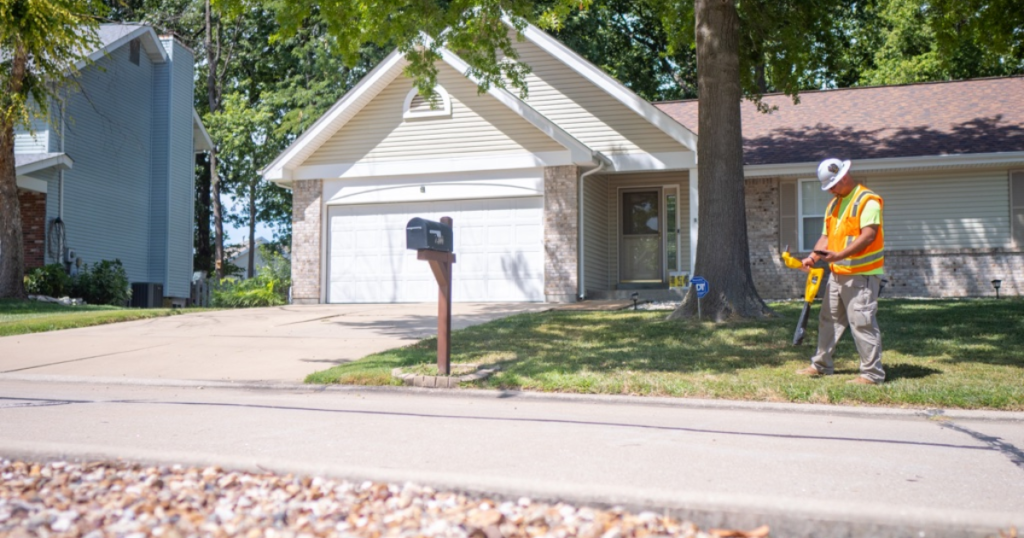
You might picture utility lines running far underground, safely out of reach of any backyard project. The reality is very different. Many lines are buried at surprisingly shallow depths, and that gap between what you imagine and what is actually there is exactly where accidents happen. Understanding how deep utility lines are buried in residential areas is not just useful trivia. It is essential knowledge before you pick up a shovel.
Whether you are planting a tree, installing a fence, or putting in a patio, knowing what is beneath your feet matters. This blog walks you through the standard depths for each type of utility line, explains why those depths vary, and tells you what to do before you ever break ground.
There Is No Single Universal Depth
One of the most important things to understand about utility line depth is that there is no single answer. Depths vary based on the type of utility, the age of the installation, local building codes, regional climate, and even the soil conditions in your specific yard. Just because a neighbor digs two feet and never hits anything does not mean your yard is the same.
Electric Lines: Typically 18 to 24 Inches
In residential settings, electric lines are generally buried between 18 and 24 inches deep, according to the National Electrical Code guidelines. However, local codes can vary this requirement. In commercial zones or areas with higher voltage requirements, lines may be buried up to 36 inches. The key point is that 18 inches is a minimum, not a guarantee of safety, since erosion and soil movement can bring lines closer to the surface over time.
Gas Lines: 18 to 24 Inches with Regional Variation
Residential gas service lines are typically buried at a minimum of 18 to 24 inches. In colder climates like Montana, where freeze-thaw cycles create significant soil movement, gas lines may be required to be buried deeper to prevent damage. The type of gas line also matters. Service lines running directly to a home sit at different depths than the larger transmission or distribution mains running through the neighborhood.
Water Lines: 12 to 36 Inches Depending on Climate
Water lines are buried deep enough to stay below the frost line, which varies significantly by location. In warmer climates, you might find water lines as shallow as 12 inches. In colder northern states, lines may be buried 36 inches or deeper to prevent freezing. This wide range is another reason why assuming depth based on location type alone is risky.
Cable and Fiber Lines: Sometimes Only a Few Inches Deep
Telecom, cable, and fiber optic lines are often the shallowest of all utility types. Cable lines have been found buried as little as 6 to 12 inches below the surface, and in some older installations, they are barely covered at all. These lines are particularly easy to cut during simple gardening or landscaping work, which is why they account for a significant portion of all utility damage incidents.
Why Lines Shift Over Time
Even if a utility line was originally installed at the correct depth, it may no longer be there. Erosion, tree root growth, frost heave, and previous excavation projects can all shift the position of buried lines. This is one reason why checking records of past utility installations is not a reliable substitute for a current locate. You need a fresh ticket from 811 before each new digging project.
The Bottom Line on Residential Utility Depths
Now that you know how deep utility lines are buried in residential areas, you understand why guessing is never a safe option. The depths vary too much, shift over time, and rarely match expectations. The only safe way to dig is to call 811 first, wait for the markings, and then proceed with care. Montana One Call is available to help with questions about utility call services and safe digging practices. Reach the team at 1-800-798-9365.